Tuesday, June 18, 2013

Argentine Icon? The Statue of Liberty on the River Plate


Frequently, relations between the United States and Argentina have been contentious. The 19th-century author, educator and politician Domingo Sarmiento admired the US but, in the 20th century, many public figures have distrusted the “Colossus of the North.” After World War II, US ambassador Spruille Braden accused Juan Domingo Perón’s government of having been pro-Axis, but Perón cleverly turned Braden’s accusations into a winning presidential campaign slogan, “Braden or Perón,” in 1946.
Many Argentines accused the US of complicity or open support of the 1976 coup against Perón’s widow María Estela Martínez (Isabel) and the subsequent 1976-83 Dirty War that resulted in perhaps 30,000 extra-judicial deaths. Still, after 1976, President Jimmy Carter’s representatives, most notably Tex Harris in Buenos Aires and Patricia Derian in Washington, strenuously investigated the dictatorship’s human rights abuses (in 2004, Harris received a decoration from Argentina’s Foreign Ministry for his efforts).

Ronald Reagan’s administration reversed their work, pandering to the Argentine junta early in his presidency and giving mixed signals on the 1982 invasion of the Falkland (Malvinas) Islands. The Reaganites eventually threw US support to Britain’s counter-invasion of the South Atlantic archipelago, but Henry Kissinger and the vicious Jeane Kirpatrick remained enthusiastic supporters of the bloodthirsty Argentine regime. President Carlos Menem, now widely reviled in Argentina, had warm relations with the US, but subsequent governments, including the current administration of Cristina Fernández de Kirchner, have kept their distance at best.

Given this historical ambivalence, I was surprised to read, in a tweet from the US Embassy, that there were five replicas of New York’s Statue of Liberty in Argentina, most of them in Buenos Aires province. I quickly corrected them as, when I visited my wife’s hometown of Olavarría in 2010, my brother-in-law casually mentioned the presence of such a statue in the riverside Parque Mitre near his house.
Despite the frequent distrust of the US government that I hear in the Argentine press and media, as well as from politicians, I have never personally experienced any anti-American sentiment. Still, I was surprised to learn of the abundance of such a US icon in the country, and wonder whether there might be even more of them. That said, Argentina has a similar icon in La Libertad Argentina, pictured above on the obverse of a 500,000-austral note from the hyperinflationary 1980s.

Moon Handbooks Chile, in Los Altos
In about a month – Wednesday, July 17, at 7 p.m., to be precise – I will offer a digital slide presentation on travel in Chile at Santa Clara County’s Los Altos Library (13 S. San Antonio Road, tel. 650/948-7683). Coverage will also include the Chilean Pacific Islands of Rapa Nui (Easter Island) and Juan Fernández (Robinson Crusoe), as well as southernmost Argentina (Tierra del Fuego and the vicinity of El Calafate) that appear in the book. I will also be prepared to answer questions about Argentina and Buenos Aires. The presentation is free of charge, but books will be available for purchase.

Saturday, June 15, 2013

No Beef for You! Argentine Consumption, Production Both Decline


According to Simon Romero’s lengthy piece in the New York Times, Argentine beef consumption and production are both declining. The country whose juicy bife de chorizo (porterhouse) has long been a culinary icon now lags behind neighboring Uruguay on the global list of per capita red-meat consumers. As profitable soybeans displace pastureland, Argentina has fallen to 11th in the ranking of beef exporters – in fact, according to the Buenos Aires daily La Nación, it exports barely half what tiny Uruguay does and even less than Paraguay, which is hardly an economic powerhouse.
What explains these declines, and what is their significance? On explanation is that Argentines are eating a healthier diet, though their annual beef consumption of 129 pounds per annum is still more than double that of the United States. Romero quotes one Argentine chef to the effect that “Around five years ago, vegetarianism started to gain traction here” but, when I wrote my first guidebook to Argentina in 1990, La Esquina de las Flores (pictured above) was already a vegetarian institution. It’s fair to say that today's vegetarian choices are more sophisticated and abundant that they were then, but even many parrillas (grill restaurants) now offer vegetarian options.
That said, the “healthier diet” doesn’t necessarily hold when, according to one report, the number of pizzerias in Buenos Aires may soon exceed the number of parrillas – thick-crusted, cheese-heavy Argentine pizza can be tasty, and it’s cheaper than beef, but it’s no weapon in the war against obesity or heart disease (the pizza pictured above may be a relative exception). Government price controls have had the unanticipated side effect of persuading some farmers to switch to soybeans which, coincidentally, provide a huge percentage of government revenue through export taxes. It’s not the first instance that, in Argentina, authorities give with one hand and take away with the other.

Moon Handbooks Chile, in Saratoga
In just a couple days – Monday, June 17, at 7 p.m., to be precise – I will offer a digital slide presentation on travel in Chile at Santa Clara Country’s Saratoga Library (13650 Saratoga Avenue, Saratoga CA 95070, tel. 408-867-6126, ext. 3817). Coverage will also include the Chilean Pacific Islands of Rapa Nui (Easter Island) and Juan Fernández (Robinson Crusoe), as well as southernmost Argentina (Tierra del Fuego and the vicinity of El Calafate) that appear in the book. I will also be available to answer questions about Argentina and Buenos Aires. The presentation is free of charge, but books will be available for purchase.

Friday, June 7, 2013

Subway to the Slums? Buenos Aires Considers the Underprivileged


Every large Latin American city has its squatter settlements, shantytowns where arrivals from the provinces can get their start in precarious dwellings built of sub-standard materials salvaged from dumpsters or construction sites. Occupying previously vacant lots, their residents lack land titles and many routine services, including electricity, which they often remedy by pirating power from the existing infrastructure, even though it can be dangerous to do so. They often lack running water and trash collection and, for that reason, conditions can also be insalubrious.
In Chile, such settlements are known as callampas (“mushrooms,” so called because they seemingly spring up overnight). In Argentina, they are villas miserias, a phrase clearly implying conditions that most Argentines would prefer to avoid. Nevertheless, over time, villas can stabilize to become communities but, more often than not, they’re still on the short end of municipal services. Argentine painter Antonio Berni depicted villa conditions in his series of oils centered on a young boy named Juanito Laguna, as depicted here in “Juanito Laguna goes to the city.”

One of Buenos Aires’s most (in)famous shantytowns is Villa 31, which many tourists see as they enter or leave the city’s Terminal Retiro, the main long-distance bus station. City residents invariably warn them to keep away from the villa because of perceived crime problems, and certainly it would be inadvisable to stroll its narrow streets flashing your Rolex.
Villa 31, though, may be entering the mainstream, at least in terms of transportation. Long ignored by governments from the local to the federal level, it may acquire its own Subte station, if Línea H of the Buenos Aires underground railroad (pictured above) extends north to eventually loop and link to the bus terminal, eventually connecting to the crosstown Línea C. The new Estación Padre Mugica – taking its name from a priest assassinated in 1974 for his work among the city’s poor – would serve Villa 31’s 25,000 residents.

It’s ironic, to a degree, that this proposal comes under a city government headed by the relatively conservative mayor Mauricio Macri. Argentine President Cristina Fernández’s administration, which detests Macri and is unpopular in the capital, fancies itself a champion of the poor, but pretty much limits its own assistance to improvised clientelism rather than durable concrete measures like improved public transportation. The government does, however, bus its clients to the central Plaza de Mayo, and elsewhere, for massive political rallies.

Moon Handbooks Chile, in Saratoga
In just ten days – Monday, June 17, at 7 p.m., to be precise – I will offer a digital slide presentation on travel in Chile at Santa Clara Country’s Saratoga Library (13650 Saratoga Avenue, Saratoga CA 95070, tel. 408-867-6126, ext. 3817). Coverage will also include the Chilean Pacific Islands of Rapa Nui (Easter Island) and Juan Fernández (Robinson Crusoe), as well as southernmost Argentina (Tierra del Fuego and the vicinity of El Calafate) that appear in the book. I will also be available to answer questions about Argentina and Buenos Aires. The presentation is free of charge, but books will be available for purchase.

Tuesday, June 4, 2013

Chilean Chat: Storms, Snow and "Reciprocity" Update


Last week, early and heavy Pacific storms hit central Chile, flooding the streets of Santiago and Valparaíso before they cleared. That’s the bad news, but the good news is that they also dropped enormous loads of snow in the nearby Andes and, this weekend, the ski resort of Valle Nevado will have one of its earliest openings ever. Barely an hour from downtown Santiago, the front brought nearly a meter (about three feet) of new snow, leaving slopes in mid-season shape. This Saturday’s opening is about three weeks ahead of the usual schedule (images courtesy of Valle Nevado).
Piñera in Washington: An Update
In a speech before the Center for Strategic and International Studies, Chilean President Sebastián Piñera has confirmed that Chile will soon acquire Visa Waiver Program status that will allow Chileans to visit the United States for up to 90 days without having to go through the cumbersome and expensive visa process. As I mentioned in my earlier post on the topic, he did not address the “reciprocity fee” issue but, since he was not really dealing with the issue of US tourists visiting Chile, I wouldn’t attach much importance to that.
The video above runs nearly an hour but covers numerous topics on Chilean politics, trade and international relations. The highly articulate Piñera speaks English with a mild accent.

Moon Handbooks Chile, in Saratoga
In less than two weeks – Monday, June 17, at 7 p.m., to be precise – I will offer a digital slide presentation on travel in Chile at Santa Clara Country’s Saratoga Library (13650 Saratoga Avenue, Saratoga CA 95070, tel. 408-867-6126, ext. 3817). Coverage will also include the Chilean Pacific Islands of Rapa Nui (Easter Island) and Juan Fernández (Robinson Crusoe), as well as southernmost Argentina (Tierra del Fuego and the vicinity of El Calafate) that appear in the book. I will also be available to answer questions about Argentina and Buenos Aires. The presentation is free of charge, but books will be available for purchase.

Saturday, June 1, 2013

Ending "Reciprocity?" Chile's Pending Visa Waiver


With some frequency in this blog, I have criticized both the Argentine and Chilean governments for their so-called “reciprocity fees,” which are a deterrent to tourism in both countries (the image below is a receipt from Santiago's international airport). It’s clearly worse in Argentina, where the government has decided to collect the fees for US citizens, Canadians and Australians at overland and maritime/fluvial crossings as well as airports. There, it appears to be primarily a government revenue-raising measure, in addition to its political symbolism.
There’s another side to this, of course, and that’s the fact the United States, Australia and Canada impose comparable fees on Argentine and Chilean citizens (To their credit, Uruguay has refrained from retaliating as Argentina and Chile have). Matters are looking up in one regard, though, as Chile’s ambassador to Washington, Felipe Bulnes has announced that the US and his country are close to an agreement that would permit Chilean visitors to enter the United States under the Visa Waiver Program as early as next year.

Inclusion in the program would save Chilean tourists both money and effort, as they would instead register online through the Electronic System for Travel Authorization (ESTA), avoiding the cost of a visa application (US$160) and a personal interview at the US consulate (not such a big deal if you live in Santiago, but expensive and time-consuming if you live in, say, Punta Arenas, which is three hours away by air).

Letting more Chileans into the United States is a win-win. An increasingly prosperous Chilean middle class will contribute to job creation and maintenance in the US tourism industry and, presumably, Chile will respond by eliminating or reducing the “reciprocity fee.” Since ESTA currently requires an online payment of US$14 per visitor, it wouldn’t be surprising to see the Chileans continue to collect that amount – they currently charge Mexican tourists the same US$30 that Chilean visitors incur for a “tourist card” at the Mexican border.

That would eliminate a major disincentive for US visitors to Chile – whether it was fair or not, adding more than US$600 to the cost of a family vacation for four was never a wise policy. Its elimination will free up additional money for US tourists to spend on good and services, rather than going directly into the Chilean treasury. With the luck, the same will happen in Argentina, but it does not seem imminent.

Moon Handbooks Chile, in Saratoga
In just over two weeks – Monday, June 17, at 7 p.m., to be precise – I will offer a digital slide presentation on travel in Chile at Santa Clara Country’s Saratoga Library (13650 Saratoga Avenue, Saratoga CA 95070, tel. 408-867-6126, ext. 3817). Coverage will also include the Chilean Pacific Islands of Rapa Nui (Easter Island) and Juan Fernández (Robinson Crusoe), as well as southernmost Argentina (Tierra del Fuego and the vicinity of El Calafate) that appear in the book. I will also be available to answer questions about Argentina and Buenos Aires. The presentation is free of charge, but books will be available for purchase.

Wednesday, May 29, 2013

Never-Ending Story? Argentina's Latest Exchange Rate Shenanigans


It’s a topic that never goes away or, at least as long as Argentines seek economic security and their government does everything possible to prevent it, their impulsive urge for the US dollar is unlikely to go away. Recently I wrote about the so-called “Colonia Dollar” and the distortions and inconveniences it had caused in the Uruguayan city across the River Plate but, in the interim, Argentina's government devised yet another one: from this moment on, Argentines visiting neighboring countries will be able to use only a single credit card to withdraw a cash advance of no more than US$100, once every three months. For other countries, they will be able to withdraw up to US$800 per month. They still cannot use their debit cards outside Argentina.
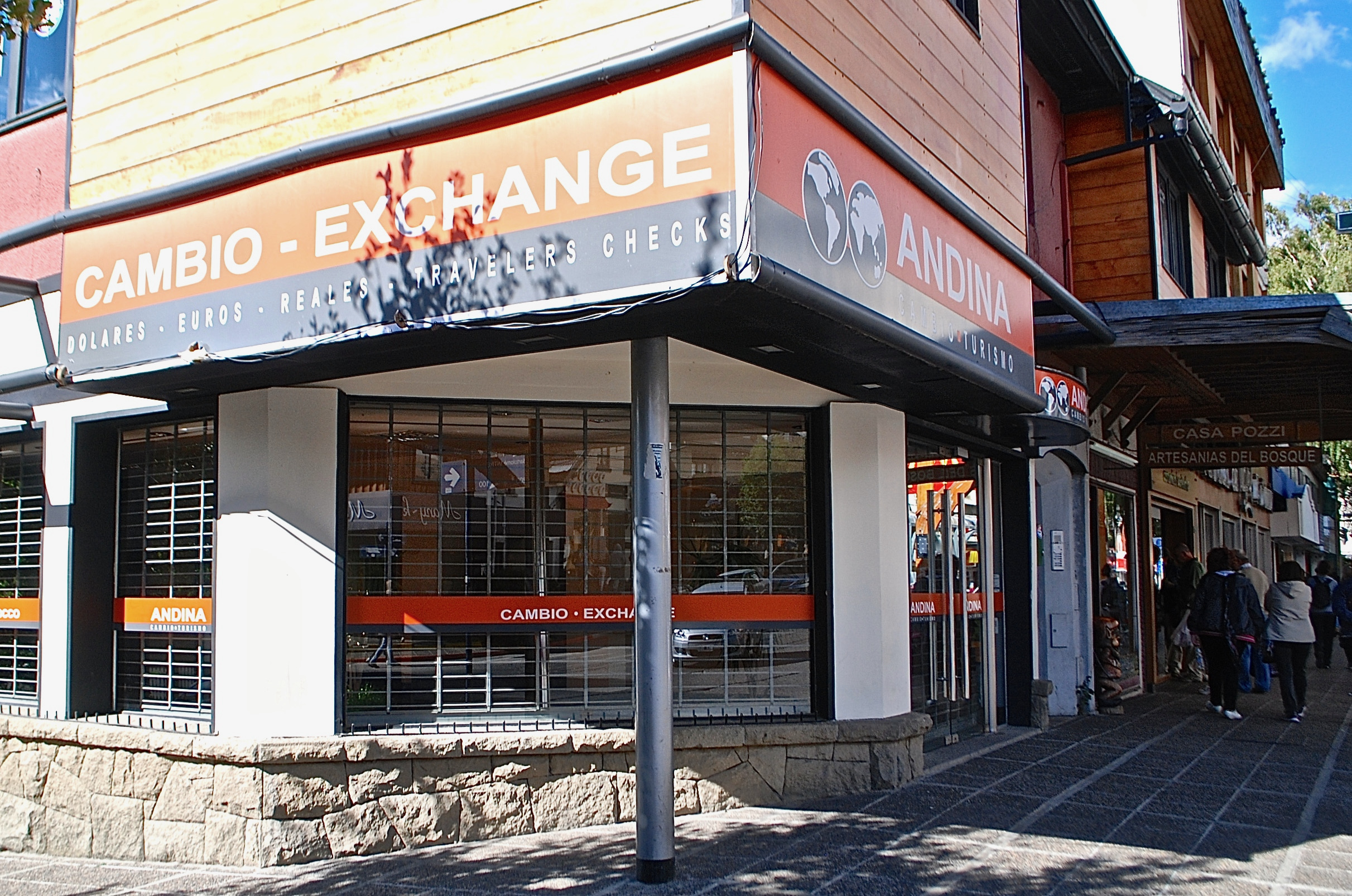
For residents of Colonia and non-Argentine tourists crossing the river, this should simply the process of obtaining cash from the city’s ATMs; the endless queues of Argentines will presumably disappear. At the same time, according to the local press, Argentines have found a new means of purchasing dollars: They can travel to Montevideo, where the exchange house rate (slightly more than eight pesos to the dollar, as suggested in this window on the city's central Avenida 18 de Julio) is less attractive than the cash advance rate (about 6.3 to the dollar), but it’s still cheaper than the so-called “blue” dollar in Buenos Aires (slightly less than nine pesos). The ferry from Buenos Aires to the Uruguayan capital is more expensive and takes longer (three hours in each direction), but Argentines can carry the equivalent of US$10,000 (roughly 52,000 Argentine pesos) without having to make a currency declaration.

For an Argentine saver, that’s a profit of roughly 10,000 pesos less, of course, the cost of the trip, though it’s also a risk as the price of “blue” dollar has dropped in the last week or ten days since the Argentine government proposed a tax amnesty for repatriated overseas funds that opposition forces have denounced as an incentive to money-laundering. That measure is presently working its way through the Argentine Congress, and seems likely to be approved. The consensus, though, appears to be that the government will make every effort to hold down the dollar until after mid-term congressional elections in October. Whether they’ll continue to be able to do so is another issue entirely.

Meanwhile, Uruguayans are taking advantage of their relatively strong currency to purchase Argentine pesos at the “blue” market rate for holidays in Buenos Aires, even though the dollar has been strengthening against the Uruguayan peso (which now goes for 20 per dollar, up around five percent over the past couple weeks). For travelers with US dollars, the Chilean peso has also been weakening and now stands at roughly 490 per dollar). Neither currency, though, remotely approaches the volatility of Argentina’s, given what Buenos Aires Herald columnist Andrew Graham-Yooll calls a “currency exchange process that more than a policy looks like a throwback to the Soviet Union.”

Moon Handbooks Chile, in Saratoga
In just a few weeks – Monday, June 17, at 7 p.m., to be precise – I will offer a digital slide presentation on travel in Chile at Santa Clara Country’s Saratoga Library (13650 Saratoga Avenue, Saratoga CA 95070, tel. 408-867-6126, ext. 3817). Coverage will also include the Chilean Pacific Islands of Rapa Nui (Easter Island) and Juan Fernández (Robinson Crusoe), as well as southernmost Argentina (Tierra del Fuego and the vicinity of El Calafate) that appear in the book. I will also be available to answer questions about Argentina and Buenos Aires. The presentation is free of charge, but books will be available for purchase.

Custom Search